Fact Check
When Your Puppy Should Start Wearing a Collar (8-Week Rule)
Table of Contents
Most puppies can wear a collar beginning at 8 weeks of age. Begin with short sessions, positive reinforcement and supervision.
The first week with a new puppy is basically happiness and chaos and 7,000 pictures in your gallery. But as soon as the thrill wears off, every new dog owner wants to know the very same thing:
When should I put a collar on my puppy
As someone who has raised more than a few puppies and as the human behind Brocia, where I design soft, stylish dog gear I’ve tried countless collars on my own pups, witnessed just about every response and figured out exactly what flies (and what definitely does not). This guide is a mix of what the pros taught me, actual institutionalized experience, and mixed in with some nice clean facts that you don’t have to question.
What Age Should You Put A Collar On A Puppy: My Personal experience
Puppies can start to wear collars when they are sitting, standing or walking at all times around 8 weeks of age is good on most puppies. This is precisely what I have observed in my own dogs. When I brought home Milo, my 8-week-old Golden Retriever puppy, for the first time, I put around his neck for the very first time … a soft blue padded collar.

His reaction?
He froze like a statue, dropped to the floor and rolled as dramatically as a Greyhound on the rug, the Siegel-shot up with his patented“Why did you betray me?” look.
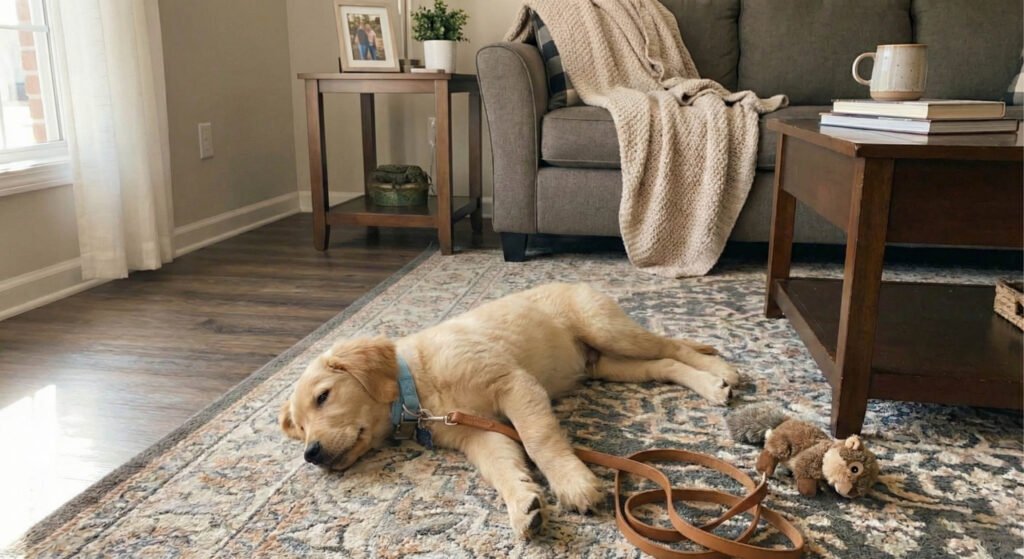
Five minutes later … he had forgotten it from me.
Coco, my Shih Tzu, was the reverse. I slipped him into collar and he sat, start playing. Zero drama pure diva force of nature.

Why 8 Weeks Is Perfect
- Puppies have stronger neck muscles
- They are psychological adventurers
- This period is part of the socialization phase
- Early exposure prevents fear later
Why Not Earlier?
I would not recommend it before 7-8 weeks, their skin is far too sensitive.
Why Not Much Later?
Waiting too long can cause:
- Fear of wearing a collar
- Anxiety when buckling
- Resistance during leash training
How to Introduce a Collar the Right Way
Choose a Soft, Lightweight Collar. Your puppy’s first collar should be like air. My personal recommendation (and what we use) is a gently padded adjustable collar such as one of these in the Adjustable vs Standard Prongs you can decide which one to buy. The puppy collars are soft and your puppy will just love wearing them all day while always getting kind compliments, they are also great as new puppy gifts.
Use Treats, Positive Reinforcement
Here’s the method I used exactly on all my dogs:
- Allow your puppy to sniff the collar treat.
- Touch collar to neck treat
- Buckle collar bigger treat
- Distract with a toy or snack
The one time Milo agreed to wear a collar, I had to bribe him with bits of tiny chicken. Coco? She took hers like she had been born ready. It’s God Damn Kute! And all Puppies Do This.
This is normal:
- Scratching
- Rolling
- Head shaking
- Looking offended
- Walking funny
Puppies don’t hurt they’re exploring a strange feeling. Milo acted as though I’d bound him with barbed wire. Coco didn’t care at all.
Start With Short Wear Times
Here is the timeline I personally follow:
| Day | Wear Time |
|---|---|
| Day 1 | 5–10 minutes |
| Day 2 | 15–20 minutes |
| Day 3 | 30–40 minutes |
| Day 4 | 1–2 hours |
| Day 5+ | Daily supervised wear |
By Day 5, most puppies don’t even notice they’re wearing anything.
False During sleep & crate time Exclude Collars
The American Kennel Club cautions against dogs sleeping in collars because of the potential and often grave damage that can occur should it become snagged.
I learned this firsthand:
Milo actually got his collar tag stuck in a blanket zipper once. Since then, I always take off collars at night.
Selecting the Best Collar: The Mistakes to Avoid
These are the specific lessons I learned over years of raising puppies and testing products.
What To Look For
- Soft padded material
- Quick-release buckle
- Lightweight feel
- Adjustable sizing
- Cute aesthetic plus comfort
That’s why I designed the Brocia padded puppy collars because the majority of the collars out there are too bulky, firm or blah.
What To Avoid
- Leather collars for young puppies
- Prong collars or choke chains never okay
- Heavy metal buckles.
- It’s also a cheap stiff nylon that irritates the skin
I recall having purchased a stiff leather collar for Milo. He hated it instantly. Lesson learned.
Collar vs. Harness: Which Comes First
Start with a Collar are:
- Lighter
- Less stressful
- Perfect for ID tags
- Easier for early training
14-15 weeks Introduce a Harness at 10-12 Weeks. Harnesses are also bulky for tiny 8 week old puppies. Milo loathed his first harness at 8 weeks. At 11 weeks? He strutted like he owned the neighborhood.
Frequently Asked Questions
Can I put a collar on my 8-week-old puppy?
Yes dog trainers and AKC both confirm it’s safe if the collar is soft and properly fitted.
Can my puppy sleep with a collar?
No Take collars off when going to bed, in the crate or when out of sight.
How can I get a puppy used to a collar?
Apply the treat-and-short-session from it the above method. My own dogs transitioned in a week.
Collar or harness first?
Collar first. Harness later. This is simply something I experienced with my own training of numerous puppies.
What size collar do I need to purchase?
Opt for an adjustable collar, so it will grow in size with your puppy.
Conclusion
Your puppy can start wearing a collar at 8 weeks old, and with gentle introduction, encouragement and the right equipment, it can be an easy even fun process. As someone who has raised multiple puppies, the answer is simple: beginning early, beginning soft and making it positive.